
Quick answer: Headway cut some therapists’ UnitedHealth-Optum pay by 30% on January 1, 2025. One New York psychologist’s rate for a 45-minute session fell from $144.27 to $103, per ClearHealthCosts (November 2024). Now Aetna is cutting pay for therapists who reach Aetna through Alma, starting July 15, 2026, per Behavioral Health Business (May 2026).
Headway and Alma made therapists a simple offer. Join the platform, and we’ll handle the insurance maze for you. Hundreds of thousands of sessions now run through that deal every month. Then the insurers changed the math. Optum rate cuts landed on both platforms a month apart. Aetna’s cut arrives July 15, 2026. Therapists paid first. Patients are next in line. Nobody asked either group what they thought.
What did Headway and Alma actually cut from therapist pay?
Start with a quick map. Headway and Alma are marketplace platforms. They sit between therapists and insurance companies. They handle billing, claims, and credentialing. Credentialing is the paperwork a therapist files to join an insurance network. It can take months to do alone. In return, the platform holds the contract with the insurer. The therapist gets whatever rate the platform passes along.
That trade made sense to a lot of clinicians. Insurance billing is a part-time job stacked on top of a full-time one. The platforms promised steady rates and less paperwork, and they grew fast because the pain they solved was real.
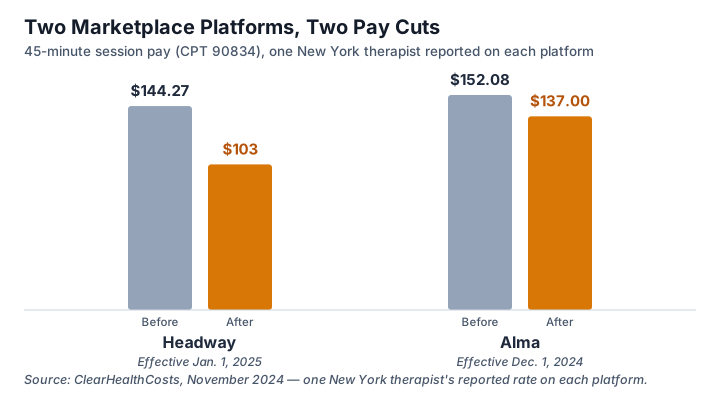
Then, in late 2024, the rate dropped. Alma moved first. On December 1, 2024, Alma cut what it pays therapists for Optum sessions. Optum is the health-services side of UnitedHealth. One New York psychologist’s pay for a 45-minute session fell from $152.08 to $137.00, per ClearHealthCosts (November 2024). Pay for the longer 60-minute session fell from $172.19 to $160.00.
Headway followed one month later. Starting January 1, 2025, Headway told providers their Optum rates would drop by as much as 30%. In the same ClearHealthCosts reporting, one psychologist’s pay for a 45-minute session fell from $144.27 to $103. CPT 90834 is the billing code for that standard 45-minute session. Nothing about the session changed except the pay.
Headway’s note to therapists deserves a careful read. The company said the new rates “reflect exactly what we’re paid from Optum directly, meaning Headway will make $0 on your Optum appointments” (ClearHealthCosts, November 2024). In plain English, the insurer’s payment is now the whole payment. There is no margin left in the middle.
Therapists ran the numbers on their own caseloads. Across the two platforms, projected income losses came to $6,000 to $28,000 a year, per ClearHealthCosts. For a solo practice, the top of that range is a pay cut most workers would call a crisis.
What is Aetna changing for Alma therapists in 2026?
The next cut has a date: July 15, 2026. Behavioral Health Business reported in May 2026 that Aetna is lowering pay for therapists who see Aetna clients through Alma. Per BHB, three changes stand out:
- Therapists with doctoral degrees will be paid at master’s-degree rates.
- Sessions running 53 minutes or longer will pay the same as sessions of 37 to 52 minutes.
- The most complex evaluation visits will pay the same as moderate ones.
In plain terms, extra training and longer sessions stop earning extra pay. That worries the clinician in me, and here is the behavioral-science reason. Longer sessions exist for a purpose. Trauma work, couples work, and crisis care don’t fit neatly into 45 minutes. Pay a 53-minute session like a shorter one, and you quietly teach a whole field to book shorter sessions. People respond to incentives, even people in helping professions.
Aetna told BHB its broader payment rules have not changed, and that therapists contracted directly with Aetna are not affected. Note the word “directly.” The cut only lands on clinicians who reach Aetna through the platform.
The pushback came fast. More than 5,000 clinicians answered Alma’s survey about the changes within days, according to Alma CEO Harry Ritter in Behavioral Health Business. Alma said publicly, “We disagree with these changes,” arguing pay should reflect doctoral training and the clinical value of longer sessions.
Then the professional bodies stepped in. On June 4, 2026, APA Services and the American Psychiatric Association sent a joint letter to Aetna-CVS Health. They asked Aetna to pause the cuts, share its reasoning, and talk with the clinicians affected. They warned the changes “devalue more complex and longer-duration services” and pressure clinicians to shorten visits or leave networks. When the psychologists and the psychiatrists sign the same letter, pay attention.
Timing matters here too. The letter is dated six weeks before the cut takes effect. Aetna can still pause this. That is the point of pushing now, while the date is still just a date.
The marketplace tax, explained
These platforms are huge. Headway raised $100 million in July 2024, valuing the company at $2.3 billion, per Fierce Healthcare. At the time it had 34,000 in-network providers across more than 40 insurance plans, running an average of 600,000-plus therapy appointments a month. Alma raised $130 million in August 2022 at a valuation near $800 million, per Fierce Healthcare.
Now look at Alma’s investor list. It includes Cigna Ventures and Optum Ventures. Optum Ventures is the investment arm of UnitedHealth’s Optum. Yes, that Optum. The payer that cut Alma therapists’ rates in December 2024 also holds a stake in Alma. I have written before about insurers buying up the care they pay for, in Your Insurer Is Becoming Your Therapist. This is the same pattern, one layer down.
So what is the marketplace tax? When a therapist’s access to insurance runs through a platform, the pay runs through it too. The platform holds the contract and the rate. The therapist holds the risk. When Optum cut rates, therapists couldn’t call Optum to argue. They got an email. The convenience comes up front. The bill arrives later, on a date the insurer picks.
There is a behavior loop underneath this, and it deserves a name. Once a full caseload bills through one platform, leaving means risking months of income while you join new networks. Switching costs keep people put. So the cuts get absorbed quietly, one clinician at a time. Headway’s own words make the point. If the platform truly makes $0 on Optum appointments at the new rates, it has no cushion left to protect its therapists. The rate rolls straight downhill. The person at the bottom is the one holding a caseload.
To be fair, neither platform invented low rates. Headway and Alma put tens of thousands of therapists in network, and Alma pushed back on Aetna in public. The numbers above are facts, and facts are how we should judge every company in this chain. The insurers set the rates. That is where the pressure belongs.
Who actually pays when the rates fall?
Therapists pay first, and we can count it. ClearHealthCosts (November 2024) put projected losses from the Optum cuts at $6,000 to $28,000 a year across the two platforms. That money doesn’t come out of a corporate budget line. It comes out of one person’s household.
Patients pay second, and they pay in access. The APA’s 2024 Practitioner Pulse Survey found more than 8 in 10 psychologists who left insurance networks, or never joined, named low reimbursement as a main obstacle (cited in the June 2026 APA Services letter). Reimbursement is just the money insurance pays for a session. When it shrinks, more therapists step away from networks. That means fewer in-network openings and longer waits. Your card still says covered. That word has never guaranteed you’ll actually be seen. I made the longer case in The Business of Being Unwell.
There is a quieter cost as well. When in-network care gets scarce, some people pay cash and stretch their budgets. Others stop looking. In my years of practice, I have watched the second group grow larger than the first. The system counts both groups as covered.
One fair point from the other side deserves space. Behavioral Health Business reported on June 9, 2026 that Aetna’s psychotherapy pay is the highest among the commercial insurers it compared. That context is real, and it still doesn’t undo the math. A cut from a high starting point shrinks a paycheck all the same. And paying a doctorate at a master’s rate tells clinicians exactly what the system thinks their extra training is worth.
Employers pay too, quietly. A thinner network means your employees wait longer to use the benefit you already bought. And the workforce behind that benefit was draining before these cuts. I traced that spiral in The Attrition Death Spiral. The APA letter says the quiet part out loud: these changes pressure clinicians to shorten visits or leave networks.
Where does this leave therapists, and the rest of us?
I’m not telling any therapist to tear up a platform contract. For a new clinician, Headway or Alma can still beat months of solo credentialing and chasing denied claims alone. The platforms solve a real problem. The question is what the solution costs when rates fall and you have no seat at the table.
If you practice on a platform, three small moves help:
- Know which insurer sets each of your rates, and read every rate notice the day it lands.
- Track how much of your income runs through one payer or one platform.
- Keep a second door open, whether that is a direct contract, cash-pay hours, or another panel.
For everyone else, watch the letter. APA Services and the American Psychiatric Association asked Aetna to pause the July 15 cuts. Whether Aetna listens will tell us who these networks are really built for. More than 5,000 clinicians raised their hands within days. That is a workforce paying attention, and it deserves company.
On the clinician side of our house, we broke down why commercial insurers pay therapists so little in the first place. The marketplace story is that same story, one middleman closer to the person doing the work. The number of therapists who can afford to take your insurance decides whether “covered” means anything at all.
FAQ
How much did Headway cut therapist pay? Headway told providers their UnitedHealth-Optum rates would fall by up to 30%, effective January 1, 2025, per ClearHealthCosts (November 2024). One New York psychologist’s pay for a 45-minute session fell from $144.27 to $103. Headway said the new rates match what Optum pays it directly.
What is Aetna changing for Alma therapists in 2026? Starting July 15, 2026, Aetna will pay doctoral-level Alma therapists at master’s-level rates, pay sessions of 53 minutes or more the same as 37-to-52-minute sessions, and pay the most complex evaluation visits the same as moderate ones, per Behavioral Health Business (May 2026). Aetna says therapists contracted directly with it are not affected.
Do Headway and Alma set therapist pay rates? The insurance company sets the base rate through its contract with the platform, and the platform passes a rate to the therapist. When Optum cut rates, Headway told therapists the new numbers “reflect exactly what we’re paid from Optum directly, meaning Headway will make $0 on your Optum appointments” (ClearHealthCosts, November 2024).
How do these pay cuts affect people looking for therapy? More than 8 in 10 psychologists who left insurance networks or never joined cited low reimbursement as a main obstacle, per the APA’s 2024 Practitioner Pulse Survey. When pay falls, more therapists leave networks. That means fewer in-network openings, longer waits, and more people paying out of pocket.
Sources
- ClearHealthCosts, “2 digital mental health platforms cut pay rates for therapists with UnitedHealth’s Optum, stirring anger” - November 2024.
- Behavioral Health Business, “Aetna Cuts Rates With Alma-Contracted Therapists” - May 21, 2026, updated with Alma’s response.
- APA Services and the American Psychiatric Association, joint letter urging Aetna to pause the rate cuts - June 4, 2026.
- American Psychological Association, 2024 Practitioner Pulse Survey, as cited by APA Services - 2024, cited June 2026.
- Fierce Healthcare, “Headway banks $100M Series D round” - July 2024.
- Fierce Healthcare, “Alma clinches $130M to expand practice software for mental health providers” - August 2022.
- Behavioral Health Business, “Aetna Reimbursement Highest for Psychotherapy Sessions Among Commercial Payers” - June 9, 2026.
Disclaimer
This article is for educational and informational purposes only. It does not constitute medical, clinical, legal, or therapeutic advice, and reading it does not create a therapist-client relationship with Matthew Sexton, LCSW or Mental Wealth Solutions, Inc. Although the author is a licensed clinical social worker, the content in this article is not clinical assessment, diagnosis, or treatment.
The rates, contract terms, and payer policies described here come from published reporting and are accurate as of their stated dates. Reimbursement rates and network rules vary by payer, plan, state, contract, and provider, and they may change after this article is published. Nothing here is business, financial, or legal advice about joining or leaving any platform or insurance network. For decisions about your own contracts or practice, confirm current terms directly with the payer or platform and consult qualified counsel or a practice advisor.
If you are in immediate emotional crisis, you can reach the 988 Suicide & Crisis Lifeline by calling or texting 988 (US). If you are experiencing domestic violence or are in physical danger, contact the National Domestic Violence Hotline at 1-800-799-7233 or visit thehotline.org. In a life-threatening emergency, call 911.
Frequently asked questions.
- How much did Headway cut therapist pay?
- Headway told providers their UnitedHealth-Optum rates would fall by up to 30%, effective January 1, 2025, per ClearHealthCosts (November 2024). One New York psychologist's pay for a 45-minute session fell from $144.27 to $103. Headway said the new rates match what Optum pays it directly.
- What is Aetna changing for Alma therapists in 2026?
- Starting July 15, 2026, Aetna will pay doctoral-level Alma therapists at master's-level rates, pay sessions of 53 minutes or more the same as 37-to-52-minute sessions, and pay the most complex evaluation visits the same as moderate ones, per Behavioral Health Business (May 2026). Aetna says therapists contracted directly with it are not affected.
- Do Headway and Alma set therapist pay rates?
- The insurance company sets the base rate through its contract with the platform, and the platform passes a rate to the therapist. When Optum cut rates, Headway told therapists the new numbers matched Optum's payments exactly, 'meaning Headway will make $0 on your Optum appointments' (ClearHealthCosts, November 2024).
- How do these pay cuts affect people looking for therapy?
- More than 8 in 10 psychologists who left insurance networks or never joined cited low reimbursement as a main obstacle, per the APA's 2024 Practitioner Pulse Survey. When pay falls, more therapists leave networks. That means fewer in-network openings, longer waits, and more people paying out of pocket.
Want to discuss this for your program?
Book a 30-min conversation. We'll walk you through deployment, the BAA, and what your rollout looks like in production.
Book a 30-min conversation